
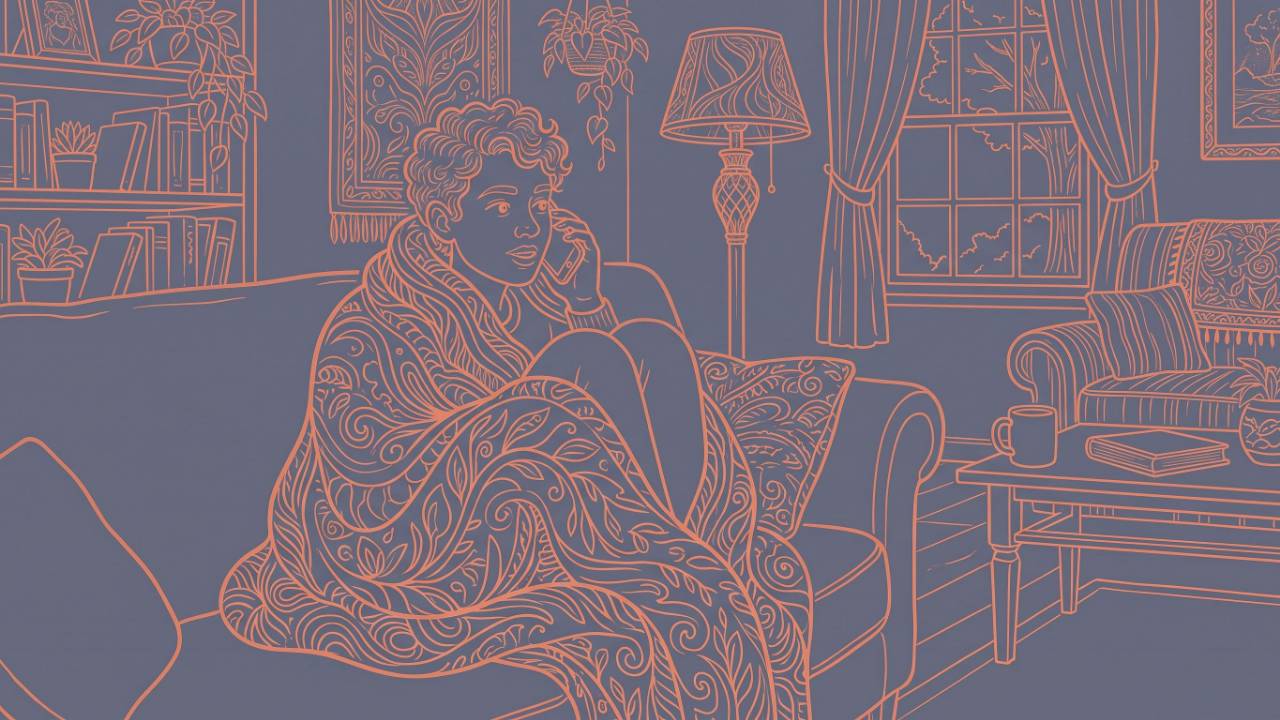
Abuse can leave you feeling unsafe in your own life.
Some people come to abuse therapy because they’re being hurt right now or carry pain from the past.
Others come because a court, doctor or someone close to them encouraged it.
Some aren’t sure what happened to them counts as abuse.
Maybe you feel:
- afraid
- angry
- confused
- on guard
Your nervous system isn’t built to make sense of human-to-human harm.
Abuse therapy can help you feel safer in your life.
What is Abuse Therapy?
Abuse therapy helps you understand the harm you lived through and reclaim your life.
It starts from the idea that abuse is never your fault.
Abuse therapy looks at how abuse affects your body, relationships and sense of self.
It can help with physical, emotional, verbal, sexual, financial or spiritual abuse, or neglect.
It’s for survivors, witnesses and people who have caused harm, since abuse affects everyone.
It can also help with abuse that happened to your ancestors, and still echoes in your family.
How Abuse Therapy Helps
Therapy gives you a place to tell the truth about what happened, at your own pace.
It can help whether the abuse is happening now, ended recently or happened long ago.
In abuse therapy you can learn to:
- make a safety plan
- name what happened
- rebuild trust in yourself
- repair after causing harm
- set and hold boundaries
Therapy can’t undo the abuse, but it can help you heal from what it left behind.
Change often begins with being believed, and grows as you learn to trust yourself.
A life free from abuse is possible.
What is an Abuse Therapist?
An abuse therapist is a registered therapist who helps people heal from abuse and violence.
Many have advanced training in trauma and violence.
Many know how to support safety planning when abuse is ongoing.
Some specialize in childhood abuse, sexual violence or intimate partner violence.
Some train in programs for people who have caused harm and want to change.
Some focus on intergenerational abuse, including the impact of residential schools.
What matters most is that the therapist is a good fit for you, whatever approach they use.
Some Approaches for Abuse Therapy
EMDR
It helps you reprocess painful memories so they hold less power over you.
Feminist
It looks at power and control, so you can see clearly it wasn’t your fault.
Somatic
It helps your body release fear and learn when it’s safe to settle.
Trauma-Sensitive
It prioritizes care by putting your safety, choice and pace first.
What to Expect in Abuse Therapy
Abuse therapy often starts with safety, not the details of what happened.
Your therapist might ask whether you are safe now, and help you plan if you aren’t.
If you’re in immediate danger, call 911. For support any time in Alberta, call or text 310-1818, the Family Violence Info Line.
Early sessions often explore what you need, what feels hardest and who supports you.
You can decide how much to share and when.
If you’ve been told to forgive, move on or find the lesson in the abuse, that’s worth talking about.
Abuse therapy can be short-term for a recent experience, or longer for childhood or long-term abuse.
Abuse was treated as a private matter.
English legal scholar William Blackstone wrote in 1765 that under the old common law a husband could physically correct his wife the way he could a child or servant.
His writing shaped law in Britain and Canada, and for the next century, what happened at home was seen as no one else’s business.
In 1874, a church worker named Etta Wheeler heard about a 10-year-old girl being beaten in New York. The girl was Mary Ellen Wilson, and she was whipped almost daily, kept locked inside and covered in bruises. Assault was already a crime, but no agency protected children and there was no clear legal way to take an abused child from their home.
Police and charities turned Wheeler away. So she went to Henry Bergh, who had founded the American Society for the Prevention of Cruelty to Animals. Bergh and his lawyer, Elbridge Gerry, took the case to court, where Mary Ellen testified about her abuse. Her caregiver was convicted, and Mary Ellen was placed in a safer home. She grew up, raised a family, named a daughter Etta, and lived to 92.
Continue reading
In 1875, Bergh and Gerry founded the New York Society for the Prevention of Cruelty to Children, the first child protection agency in the world. It investigated reports of abuse, removed children from danger and pushed for protection laws.
In 1887, John Joseph Kelso founded the Toronto Humane Society, and in 1891 he founded the Children’s Aid Society of Toronto, the first in Canada.
In 1962, pediatrician Henry Kempe described battered child syndrome. He showed doctors that some children’s injuries came from their own caregivers.
On April 1, 1973, Interval House opened in Toronto as Canada’s first shelter for women and children escaping abuse.
In 1979, psychologist Lenore Walker described the cycle of violence. She showed why leaving an abusive relationship is so hard.
In 1982, Member of Parliament Margaret Mitchell told the House of Commons that 1 in 10 husbands beat their wives. Some members laughed. The public outrage that followed changed how Canada talked about family violence.
Police in Canada often treated wife assault as a family matter and left it to the wife to press charges. In 1983, Canada made it a crime to sexually assault a spouse, and federal guidelines told police to lay charges themselves.
Phil Fontaine, Grand Chief of the Assembly of Manitoba Chiefs, spoke publicly in 1990 about the abuse he survived at residential school. Few survivors had said it so openly, and it helped others come forward.
In 2019, the National Inquiry into Missing and Murdered Indigenous Women and Girls released its final report. It named the violence as rooted in colonization.
In 2026, Canada passed a law making coercive control between intimate partners a crime, starting in 2028.
But naming abuse hasn’t always meant believing survivors.
Survivors are often asked why they stay, instead of what keeps them there.
Some are told the abuse happened for a reason, or made them stronger.
Couples and family therapy sometimes puts survivors in the room with the person who hurt them, even while the abuse is still happening.
And abuse passed down through families, cultures and countries is still rarely named.
Trauma-sensitive abuse therapy works inside those gaps. It puts your safety first. It places responsibility with the person who caused harm. It never asks you to find meaning in the abuse. And it recognizes harm passed down through generations.
Trauma-sensitive therapy believes you and trusts how you responded.
Trauma-Sensitive Abuse Therapy
What if your reactions were the best way to survive?
When the person who hurt you was close, freezing, pleasing or staying quiet may have kept you safer.
Trauma-sensitive therapists understand responses to abuse as survival, not weakness.
5 phrases you might hear in Trauma-Sensitive Abuse Therapy:
- It wasn’t your fault.
- Are you safe right now?
- You don’t have to tell me everything.
- You did what you needed to survive.
- What is your body saying right now?
Trauma-sensitive abuse therapy invites you to trust your body.
Principles of Trauma-Sensitive Abuse Therapy
Safety first
Your safety comes before anything else. If abuse is ongoing, planning for safety is part of the work.
No silver lining
There is no lesson to find in what happened. Healing doesn’t include thanking someone for teaching you.
Not your fault
Abuse is never caused by the person who was harmed. What happened is not about your worth.
Breaking the cycle
Abuse can echo through families and generations. Naming it can help change what carries forward.
Questions You Can Ask an Abuse Therapist
A consultation is a good time to ask questions. Trust how you feel after the conversation as much as the answers themselves.
Do you have training in abuse and trauma?
Can you help me plan for safety?
Do I have to talk about what happened?
Will you ever see me with the person who hurt me?
Do you work with people who have caused harm?
How do you understand family and cultural history?
Related Topics in This Library
Where would you like to go next?




Free mental health education for trauma-sensitive care in every room and relationship.
Mailing Address:
11500 29 St SE #105
Calgary, AB T2Z 3W9