What Happens When Men Outgrow Old Survival Tools
Jun 22, 2025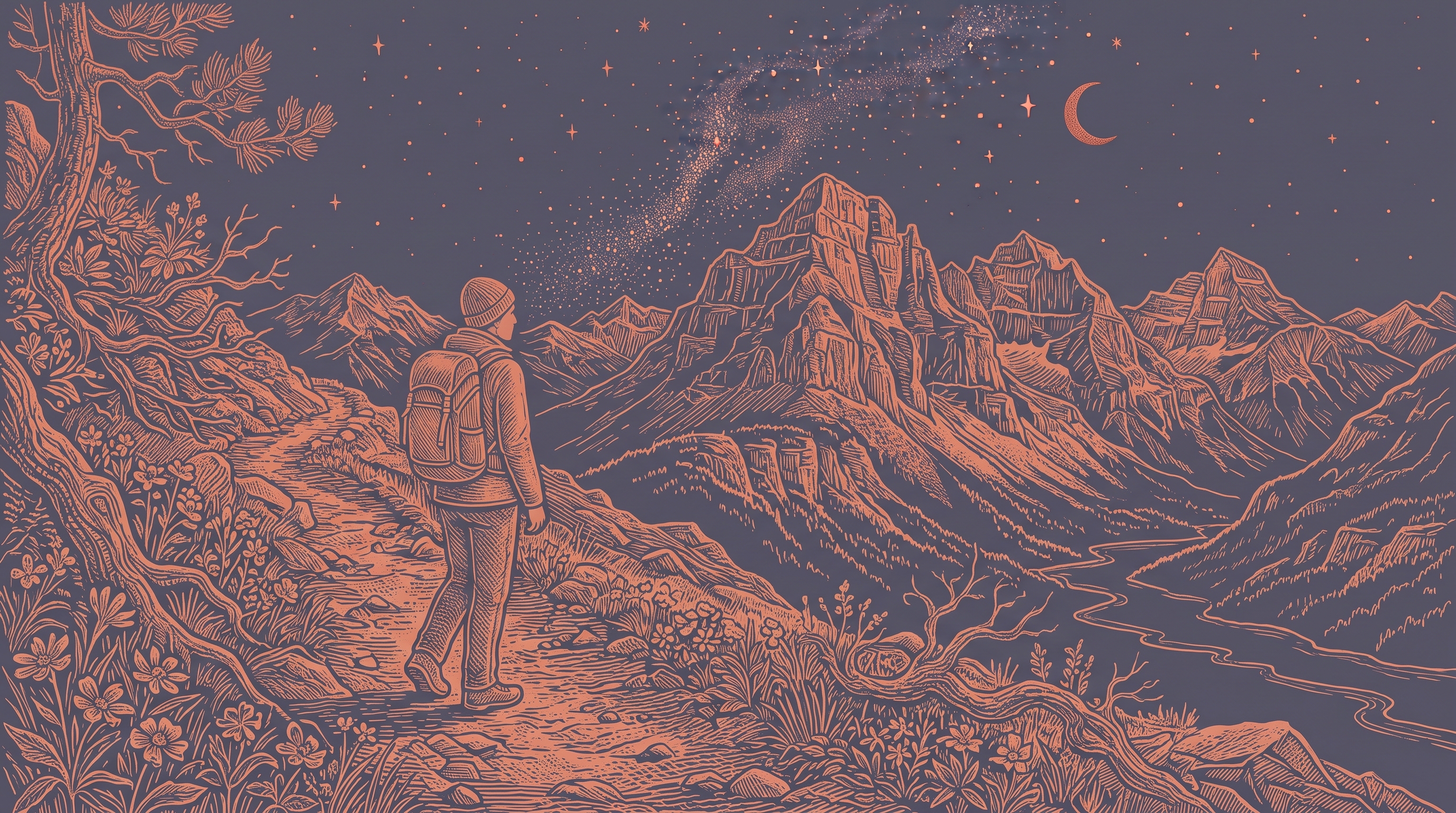
There's a point many men reach, quietly and often alone, where things start to feel off. You've packed it away for years: the stress, the doubts, the resentment, the discomfort that didn't fit anywhere. So you stuffed it into the bottom of your mental backpack and kept going.
Because that's what you were taught to do. Keep it together. Get through it. Be the steady one.
But now, the backpack is overstuffed. The path feels heavier with every step. And you're starting to realize you can't carry this the same way anymore.
The in-between space
This is the in-between space. Not quite in crisis. Not thriving either. Just stuck. Foggy. Out of alignment.
You're not who you used to be, but you're not yet sure who you're becoming. And it's messing with how you show up, especially in your relationships.
You might feel more distant, more reactive, less present. You might hear things like:
- I can't reach you.
- You're here, but you're not really here.
- Why do you always shut down when things get hard?
And you don't always have the words. Because it's not just about what's happening now. It's about everything you've packed away over the years.
What the nervous system remembers
The nervous system remembers what you've tried to forget.
All those moments you didn't feel safe to speak. All the pressure to figure it out alone. All the ways connection didn't feel safe, or earned, or possible.
That doesn't just disappear. It gets stored in your body, your breath, your reflexes.
And when things get hard now, when emotions rise or someone gets close, your nervous system reaches for old survival tools. Shut down. Walk away. Numb out. Shove it aside.
That's not weakness. That's protection. But protection isn't the same as connection.
When the trail forks
You can't bulldoze your way through becoming who you're meant to be.
This kind of stuckness, the I don't know what I need, but I know this isn't it feeling, isn't a problem to solve. It's more like arriving at a fork in the trail.
One direction is overgrown. It's unfamiliar, slower, and not well marked. But something in you knows it leads somewhere truer.
The other path is the old one. Well-worn. Predictable. But it doesn't take you where you want to go anymore.
Choosing something new takes courage. Not to push your way forward, but to stay with what you feel long enough to learn from it.
How relationships shift
When you begin to outgrow old survival tools, something shifts.
Relationships change when you change. When you start tending to what's underneath, like the frustration, the numbness, and the anxiety you didn't have words for, you begin to show up differently:
- You stay in the conversation a little longer.
- You soften when you used to shut down.
- You start speaking, not performing.
- You actually feel present, not just playing the role.
- You build internal sturdiness, not just external strength.
And from that place, relationships become places of mutual care, not pressure or performance.
The work of becoming
This is the work: not to fix yourself, not to become someone else, but to unpack the weight you've carried for so long and come home to the man you were always becoming.
You're not lost. You're in between who you were and who you're becoming.
And there's deep wisdom in that space, if you're willing to slow down, listen, and take the next honest step.
Trauma Therapy in Alberta
If old coping patterns no longer fit who you're becoming, reaching out for support can help.
Trauma therapy offers a space to understand where those patterns came from and build something new. A therapist can help you make sense of your history and find a more grounded way forward.
You don't have to do this alone. Your next step doesn't have to be big. It just has to be yours.
This article is for educational purposes only and is not a substitute for therapy, medical advice, diagnosis, or treatment.
If you or someone you care about is in crisis or at risk of harm, please get help now. Call 911 or go to your nearest emergency department. You can also call or text 988 any time for suicide and crisis support. For more options, see our crisis support page.
About the Author
Danielle Morran is a Canadian Certified Counsellor who works with adults and families navigating anxiety, overwhelm, and relational stress through somatic and attachment-based therapy.
Therapy Alberta is a free digital mental health library offering psychoeducation and video courses on mental health, therapy and trauma-sensitive care, with a private community in Alberta.